
Beyond the Fed: 4 Hidden Signals Driving the Next Big Market Move
Introduction: Why the Fed Isn’t the Whole Story
Financial markets often react to Federal Reserve decisions as though they are the single force controlling global asset prices. Yet history repeatedly shows that the biggest market moves are driven not just by policy announcements, but by the hidden signals beneath them.
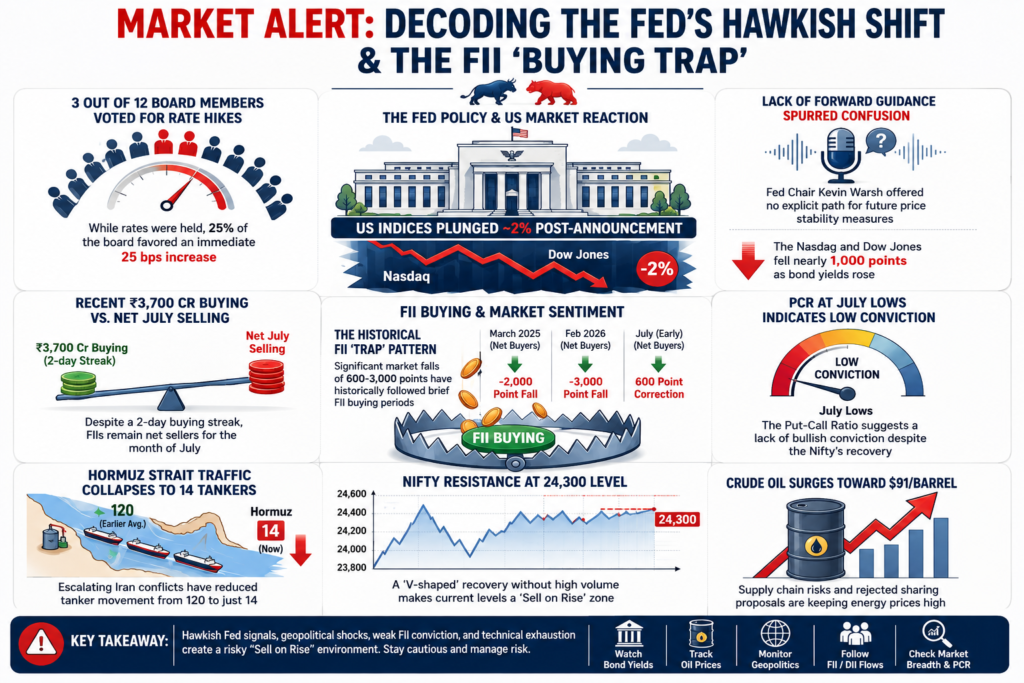
The latest Federal Reserve meeting kept interest rates unchanged, but instead of celebrating, investors watched U.S. equity markets tumble nearly 2%. The reason was simple: markets weren’t reacting to today’s decision—they were repricing tomorrow’s risks.
Behind the headlines, rising Treasury yields, geopolitical tensions in the Middle East, institutional positioning, and a major sector rotation are quietly reshaping the investment landscape.
Understanding these signals may prove far more valuable than simply following interest rate headlines.
1. The Fed’s Dot Plot Revealed a More Hawkish Future
Although the Federal Reserve left interest rates unchanged, policymakers signaled that inflation remains a major concern.
The updated projections suggested that interest rates may stay elevated for longer than investors previously expected.
This change immediately affected global bond markets.
Treasury yields rose across multiple maturities as investors adjusted portfolios for a prolonged period of tighter monetary policy.
For equity markets, higher yields generally translate into:
- Higher borrowing costs
- Lower valuation multiples
- Increased pressure on growth stocks
- Greater market volatility
Sometimes the biggest market moves occur not because the Fed acts—but because investors change their expectations.
2. The Strait of Hormuz Has Become a Global Inflation Risk
Energy markets remain one of the largest macroeconomic risks facing investors.
The Strait of Hormuz is responsible for transporting a significant share of the world’s oil exports.
Any disruption to shipping routes can quickly push crude oil prices higher.
Elevated oil prices affect nearly every economy by increasing:
- Transportation costs
- Manufacturing expenses
- Consumer inflation
- Corporate operating costs
Persistent energy inflation also limits the flexibility of central banks.
As long as oil prices remain elevated, policymakers may hesitate to reduce interest rates despite slowing economic growth.
3. Should Investors Trust Recent FII Buying?
Foreign Institutional Investors often influence market sentiment.
However, experienced investors understand that institutional buying should always be viewed in context.
History shows that temporary buying activity has occasionally been followed by significant market corrections.
Rather than focusing solely on daily inflow numbers, investors should evaluate:
- Derivatives positioning
- Futures activity
- Put-Call Ratio (PCR)
- Institutional hedging
- Net monthly flows
These indicators often provide a more complete picture of institutional conviction than cash-market transactions alone.
4. The Great Sector Rotation Is Already Underway
Market leadership rarely remains constant.
As valuations become stretched in one sector, institutional capital often rotates into areas offering better risk-adjusted opportunities.
Recent market activity suggests investors are increasingly exploring sectors with stronger defensive characteristics and relatively attractive valuations.
Areas receiving greater attention include:
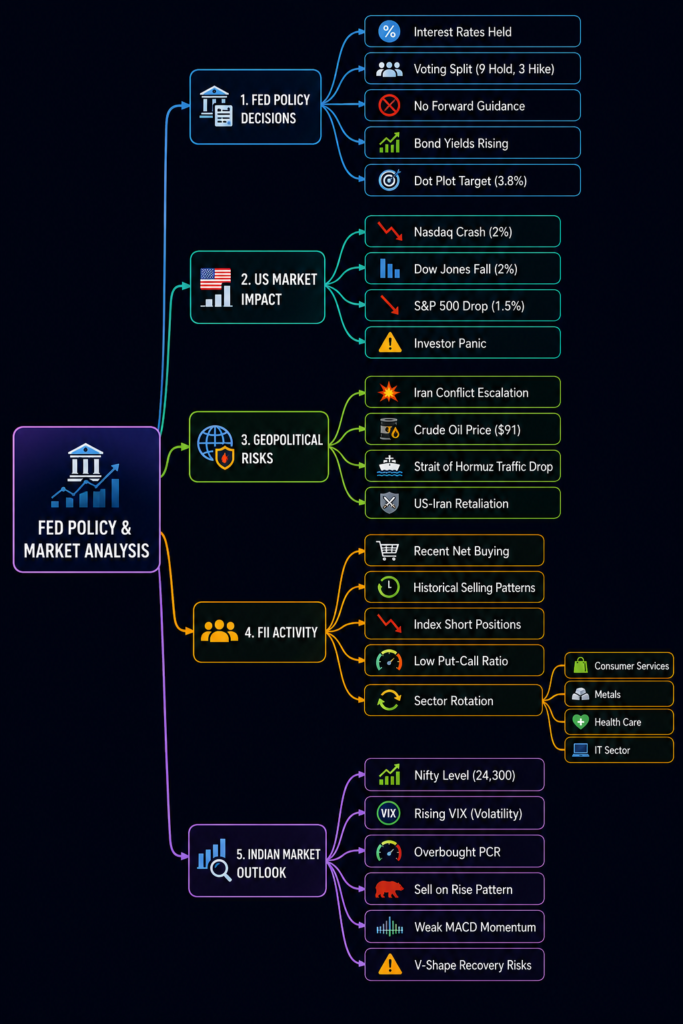
Consumer Services
Domestic demand remains comparatively resilient despite global uncertainty.
Healthcare
Healthcare continues to attract investors because of its defensive earnings profile.
Metals
Commodity-related businesses may benefit if infrastructure spending remains strong.
Information Technology
Despite recent weakness, selective IT companies may become attractive if valuations normalize and earnings expectations stabilize.
Sector rotation often begins quietly before becoming obvious to the broader market.
Technical Analysis: Is the Rally Losing Momentum?
The recent recovery has improved market sentiment.
However, several technical indicators suggest investors should remain cautious.
Current observations include:
- Rising India VIX
- Weak market breadth
- Slowing momentum indicators
- Elevated Put-Call Ratio
- Mixed derivatives positioning
Healthy bull markets typically show broad participation across sectors.
When fewer stocks drive index gains while volatility increases, traders often become more defensive.
What Should Investors Monitor Next?
Instead of focusing exclusively on central bank meetings, investors should closely monitor five key indicators:
- U.S. Treasury yields
- Crude oil prices
- Middle East geopolitical developments
- FII and DII investment trends
- Market breadth and volatility
Together, these indicators often provide earlier warnings than headline market movements.
Investment Strategy in a “Sell on Rise” Environment
Periods of elevated uncertainty require discipline rather than aggressive speculation.
A prudent approach may include:
- Diversifying across sectors.
- Avoiding excessive leverage.
- Maintaining appropriate cash reserves.
- Monitoring global macroeconomic trends.
- Prioritizing fundamentally strong businesses over momentum trades.
Risk management becomes especially valuable when markets transition between economic cycles.
Final Thoughts
Markets are entering a phase where macroeconomic forces may matter more than earnings headlines.
Higher bond yields, persistent inflation risks, geopolitical uncertainty, sector rotation, and changing institutional positioning suggest investors should prepare for increased volatility rather than expecting a straight-line rally.
The strongest portfolios are rarely built by chasing the latest headlines—they are built by understanding the deeper forces shaping global markets.
As global liquidity evolves through August and September, investors who pay attention to these hidden signals may be better positioned to navigate whatever comes next.
Frequently Asked Questions (FAQs)
Why did markets fall even though the Fed kept rates unchanged?
Markets reacted to the Fed’s forward-looking projections and expectations of higher interest rates for longer, rather than the current rate decision.
Why are Treasury yields important for stock markets?
Higher Treasury yields can increase borrowing costs, reduce equity valuations, and encourage investors to shift toward fixed-income assets.
How does the Strait of Hormuz affect financial markets?
Any disruption to oil shipments through the Strait of Hormuz can push crude prices higher, increasing inflation and influencing central bank policy.
What is sector rotation?
Sector rotation is the movement of investment capital from one industry to another as investors adjust to changing economic conditions and valuations.
What should investors watch in the coming months?
Key indicators include Federal Reserve policy, U.S. bond yields, crude oil prices, geopolitical developments, FII/DII flows, market breadth, and corporate earnings.
Best SEO Title (Recommended)
Beyond the Fed: 4 Hidden Market Signals Every Investor Must Watch Before the Next Big Move
Top 10 SEO Titles
- Beyond the Fed: 4 Hidden Market Signals Every Investor Must Watch Before the Next Big Move
- Fed Pause, Market Panic: 4 Hidden Signals Driving the Next Stock Market Crash?
- Why the Market Fell After the Fed Decision: 4 Hidden Signals You Can’t Ignore
- Beyond Interest Rates: 4 Hidden Forces Shaping the Future of Global Markets
- Is This Rally Running Out of Steam? 4 Hidden Market Signals Revealed
- 4 Hidden Signals the Bond Market, Oil Prices, and FIIs Are Sending Right Now
- The Fed Isn’t the Whole Story: 4 Hidden Signals That Could Decide the Next Market Trend
- Global Markets at a Crossroads: 4 Hidden Signals Smart Investors Are Watching
- From Bond Yields to Hormuz: 4 Hidden Risks That Could Shake Stock Markets
- Market Rally or Bull Trap? 4 Hidden Signals Pointing to Higher Volatility Ahead