
Why the “Peace Rally” Failed: The Five Forces Driving Global Markets
Markets often rally on hope—but they move on reality.
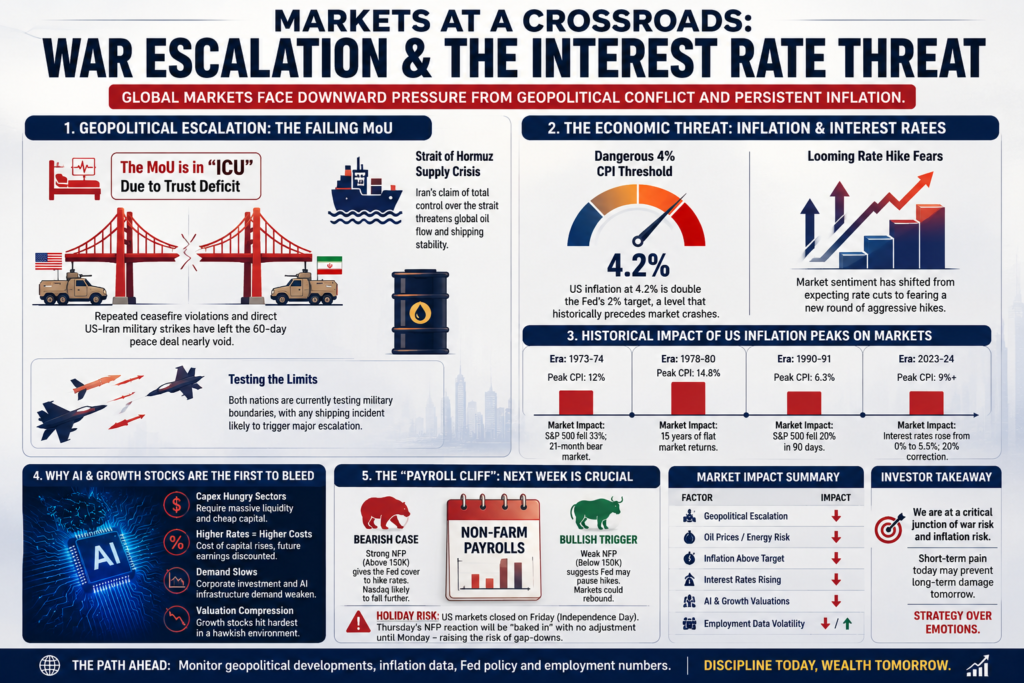
For weeks, investors expected easing tensions in the Middle East to ignite a sustained global rally. Initial optimism lifted equities briefly, but that enthusiasm faded quickly as investors shifted their focus to inflation, interest rates, oil prices, and geopolitical uncertainty.
Instead of a lasting “peace rally,” markets entered another period of heightened volatility.
This article examines the five major forces currently influencing investor sentiment and explains why the recent market rebound lost momentum.
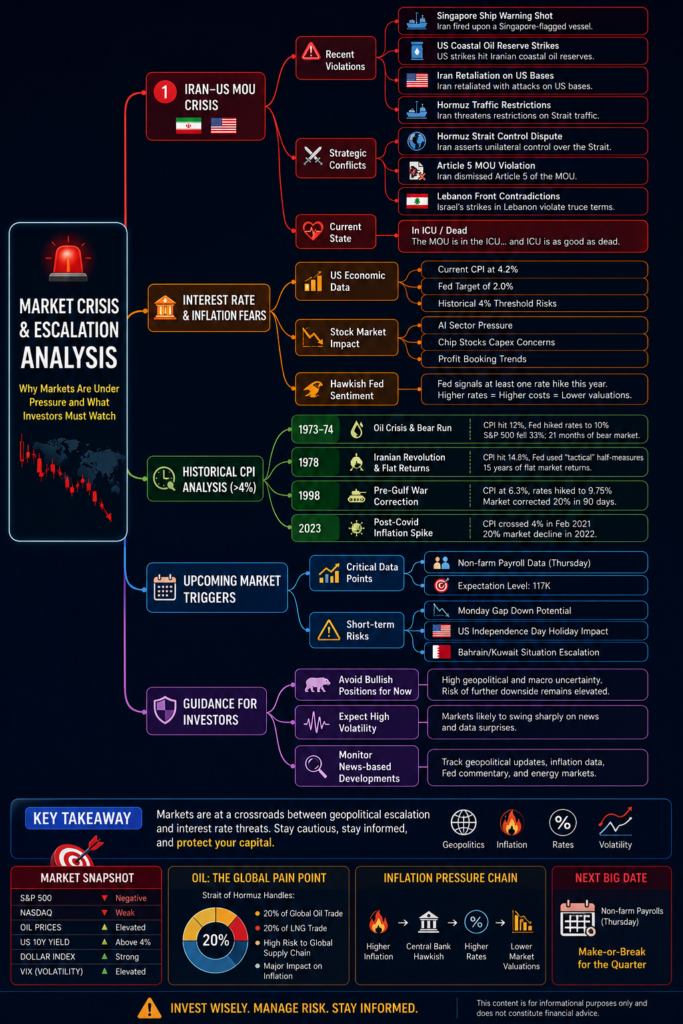
Global Market Snapshot
| Indicator | Current Theme | Market Impact |
|---|---|---|
| Geopolitics | Middle East Tensions | High Volatility |
| Oil Prices | Supply Risk | Inflation Pressure |
| US Inflation | Above Target | Hawkish Fed |
| Bond Yields | Elevated | Pressure on Growth Stocks |
| AI Sector | Valuation Reset | Nasdaq Weakness |
| Dollar | Strong | Emerging Market Pressure |
1. Peace Doesn’t Mean Stability
Even when diplomatic agreements are announced, markets look beyond headlines.
Investors evaluate:
- Implementation
- Compliance
- Military developments
- Regional escalation risks
If uncertainty remains high, geopolitical risk premiums often stay embedded in asset prices.
Geopolitical Risk Flow
Regional Conflict
        │
        ▼
Oil Supply Risk
        │
        ▼
Higher Energy Prices
        │
        ▼
Higher Inflation
        │
        ▼
Higher Interest Rates
        │
        ▼
Lower Stock Valuations
2. Strait of Hormuz: The World’s Energy Chokepoint
Approximately 20% of global oil consumption passes through the Strait of Hormuz.
Any disruption raises concerns about:
- Oil supply
- Shipping insurance
- Freight costs
- Global inflation
Why Hormuz Matters
| Metric | Approximate Value |
|---|---|
| Global Oil Through Strait | ~20% |
| LNG Trade Through Strait | ~20% |
| Countries Dependent | Asia, Europe |
| Market Sensitivity | Extremely High |
Global Energy Supply Chain
Middle East Oil

        │

Strait of Hormuz

        │

Global Shipping

        │

Refineries

        │

Fuel Prices

        │

Inflation

        │

Central Banks
3. Inflation Is Still the Biggest Market Driver
While geopolitical events dominate headlines, inflation remains the primary driver of monetary policy.
Higher inflation generally leads to:
✔ Higher bond yields
✔ Higher borrowing costs
✔ Lower corporate margins
✔ Pressure on equity valuations
Inflation vs Interest Rates
Higher Inflation

        ▼

Central Bank Tightening

        ▼

Higher Interest Rates

        ▼

Higher Bond Yields

        ▼

Growth Stocks Under Pressure

        ▼

Market Volatility
Historical Inflation & Market Stress
| Period | Main Driver | Market Effect |
|---|---|---|
| 1973–74 | Oil Shock | Major Equity Decline |
| Early 1980s | High Inflation | Aggressive Rate Hikes |
| 2022 | Inflation Surge | Technology Sell-Off |
| Today | Inflation + Geopolitics | Elevated Volatility |
Historical outcomes vary and should not be interpreted as a prediction of future market performance.
4. Why AI Stocks React First
Technology companies typically trade at higher valuations because investors expect strong future earnings.
Higher interest rates reduce the present value of those future cash flows.
This is why sectors such as:
- Artificial Intelligence
- Semiconductors
- Cloud Computing
- Software
- Robotics
often react more sharply during periods of rising yields.
Growth Stock Sensitivity
Higher Rates

      ▼

Higher Cost of Capital

      ▼

Lower Future Valuations

      ▼

AI & Technology Stocks Decline
AI Sector Risk Matrix
| Factor | Impact |
|---|---|
| Higher Rates | High |
| CapEx Slowdown | High |
| Semiconductor Demand | Medium |
| Corporate Spending | Medium |
| Valuation Compression | High |
5. Employment Data Can Move Markets
The US Non-Farm Payrolls (NFP) report is one of the most closely watched economic indicators.
Markets use it to assess:
- Economic strength
- Labor market conditions
- Inflation pressures
- Future Federal Reserve decisions
Possible Market Scenarios
| NFP Outcome | Possible Interpretation |
|---|---|
| Strong Jobs | Economy Resilient → Higher Rate Expectations |
| Moderate Jobs | Balanced Outlook |
| Weak Jobs | Potential for Easier Monetary Policy |
Markets often react to the combination of payroll growth, unemployment, and wage inflation—not payroll numbers alone.
Market Sentiment Dashboard
| Factor | Current Bias |
|---|---|
| Geopolitics | Negative |
| Inflation | Negative |
| Oil | Negative |
| Fed Policy | Neutral to Negative |
| Corporate Earnings | Mixed |
| Employment | Data Dependent |
What Investors Should Watch Next
Economic Data
- US CPI
- PPI
- Non-Farm Payrolls
- GDP
- Retail Sales
Central Banks
- Federal Reserve
- ECB
- Bank of Japan
Geopolitical Events
- Middle East developments
- Shipping routes
- Energy markets
- Sanctions
Corporate Earnings
- AI Companies
- Semiconductor Firms
- Energy Producers
- Banks
Risk vs Opportunity Matrix
High Inflation
        │
        ▼
Higher Rates
        │
        ▼
Short-Term Market Pressure
        │
        ▼
Long-Term Buying Opportunities
Frequently Asked Questions
Why didn’t markets rally after peace announcements?
Markets generally price in expectations before major events. If the announced outcome is weaker than expected—or uncertainty remains—prices may reverse.
Why are oil prices important?
Oil affects transportation, manufacturing, food, and energy costs. Rising oil prices can contribute to higher inflation.
Why do AI stocks fall during rate hikes?
Higher interest rates reduce the present value of expected future earnings, making high-growth companies more sensitive to valuation changes.
What is the Strait of Hormuz?
A strategic maritime route connecting the Persian Gulf with global markets. A significant share of the world’s oil and LNG exports passes through it.
Key Takeaways
✅ Geopolitical risks remain a major source of market volatility.
✅ Inflation and central bank policy continue to dominate equity valuations.
✅ Oil supply concerns influence inflation expectations worldwide.
✅ Growth sectors such as AI and semiconductors are especially sensitive to rising yields.
✅ Investors should monitor economic data, central bank decisions, and geopolitical developments together rather than focusing on a single headline.
Final Thoughts
Financial markets rarely move because of one event alone.
Today’s environment reflects the interaction of geopolitics, inflation, interest rates, corporate earnings, and investor expectations.
Rather than reacting to headlines, long-term investors often benefit from understanding how these forces interact over time.
Periods of volatility can create both risks and opportunities—but disciplined risk management and diversification remain essential.
Top 10 Best Titles
- The Peace Rally Was a Trap: 5 Shocking Reasons Global Markets Are Crashing Again
- Why the Peace Rally Failed: The 5 Hidden Forces Driving Global Market Turmoil
- The $10 Trillion Reality Check: Why Global Markets Ignored the Peace Deal
- Peace Didn’t Save the Markets: The Truth Behind the Global Sell-Off
- From Peace to Panic: Why Wall Street Is Selling Despite Middle East Talks
- The Bull Trap Explained: Why Global Markets Turned Bearish After the Peace Deal
- Why the Nasdaq Is Bleeding: 5 Global Risks Every Investor Must Know
- The Market’s Biggest Mistake: Why the Peace Rally Collapsed Overnight
- The Calm Before the Storm? Why Global Markets Are Pricing in a Bigger Crisis
- Oil, Inflation & War: Why the Global Market Rally Suddenly Died