
Is the AI Boom Rewriting the Rules of Global Investing?
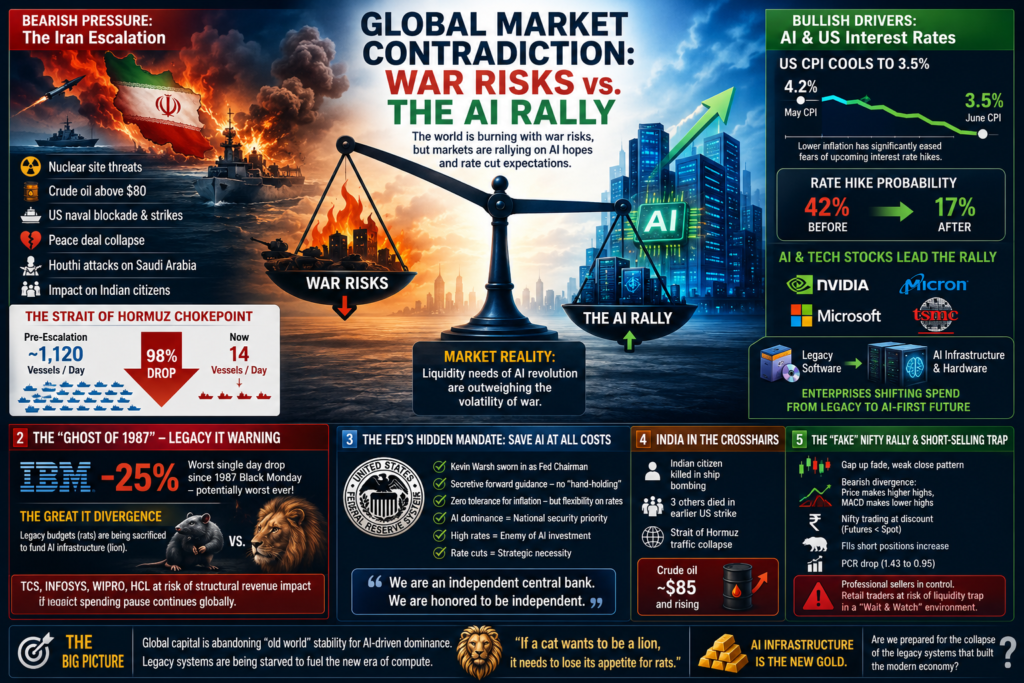
Global financial markets are sending investors a confusing message. On one side, geopolitical tensions continue to escalate with military conflicts in the Middle East, rising energy risks, and increasing uncertainty over global trade routes. On the other side, technology stocks—especially companies leading the artificial intelligence revolution—continue to attract massive institutional capital.
This unusual divergence suggests that investors are no longer valuing markets through the traditional lens of geopolitical stability. Instead, capital is flowing toward industries expected to dominate the next decade.
The biggest question for investors is no longer “Is the world becoming safer?” but “Who will dominate the AI economy?”
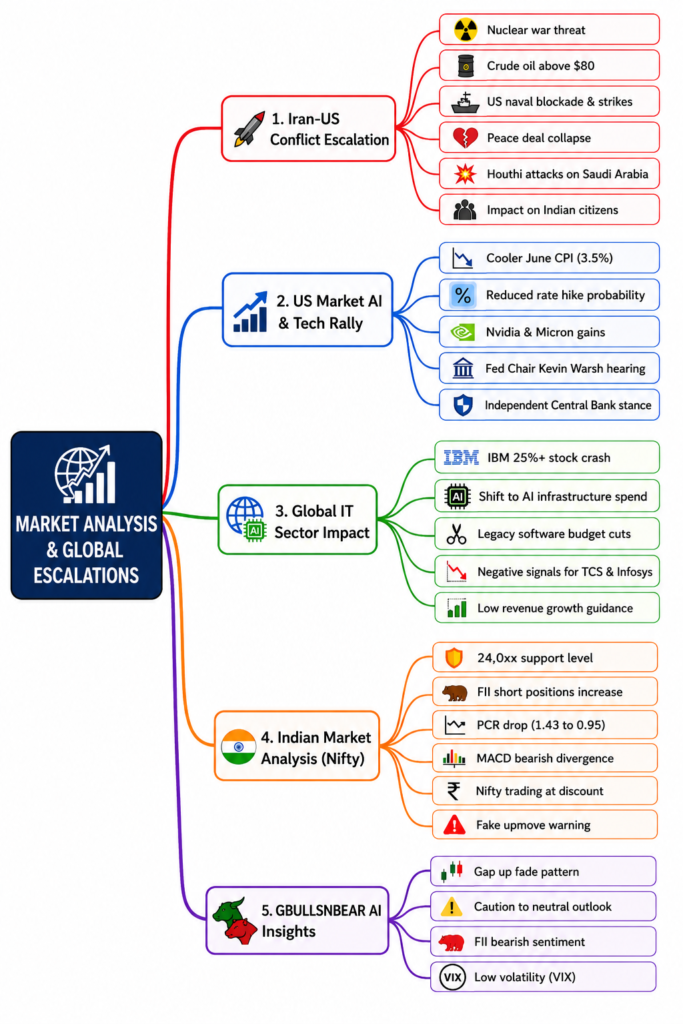
1. The War-Market Paradox: Why Geopolitical Chaos Failed to Break Tech Stocks
Historically, wars, military conflicts, and geopolitical uncertainty pushed investors toward defensive assets such as gold, government bonds, and utilities. However, the current market cycle is behaving differently.
Despite escalating tensions in the Middle East, semiconductor companies, AI infrastructure providers, and cloud computing giants continued to outperform.
The primary reason was simple: inflation cooled faster than expected.
Lower inflation immediately increased expectations that the U.S. Federal Reserve could eventually move toward easier monetary policy. Since AI companies require enormous capital expenditure to build data centers, GPUs, and cloud infrastructure, lower interest rates dramatically improve their long-term valuations.
For today’s market, the cost of capital matters more than geopolitical headlines.
Key Insight
The market currently views lower interest rates as a stronger catalyst than geopolitical risk.
2. The Great IT Divergence: AI Winners vs Legacy Technology Losers
One of the biggest structural themes emerging globally is the separation between AI infrastructure companies and traditional IT service providers.
Enterprises are reallocating technology budgets.
Instead of spending heavily on maintaining legacy software systems, organizations are increasingly directing capital toward:
- Artificial Intelligence
- Cloud Infrastructure
- Data Centers
- Automation
- Machine Learning
- GPU Computing
This creates two very different groups of companies.
AI Winners
- NVIDIA
- AMD
- Broadcom
- TSMC
- Microsoft
- Amazon AWS
These companies supply the infrastructure powering the AI revolution.
Legacy IT Businesses Under Pressure
Traditional IT outsourcing and maintenance businesses face slower spending growth as clients prioritize AI investments.
For Indian IT companies such as:
- TCS
- Infosys
- Wipro
- HCLTech
- Tech Mahindra
The challenge is becoming increasingly strategic.
If global enterprises continue redirecting budgets toward AI infrastructure, legacy application maintenance, and traditional outsourcing revenues could experience slower growth over the coming years.
The future winners will be companies that successfully transform into AI implementation partners rather than remaining legacy outsourcing providers.
3. The Federal Reserve’s AI Dilemma
The Federal Reserve now faces one of the most difficult balancing acts in decades.
Its traditional mandate includes:
- Price Stability
- Maximum Employment
However, another factor is becoming increasingly important.
The United States cannot afford to lose its leadership in Artificial Intelligence.
Building AI infrastructure requires trillions of dollars in long-term investment.
Higher interest rates increase financing costs for:
- Data Centers
- Semiconductor Manufacturing
- AI Research
- Cloud Infrastructure
As a result, every inflation report has become a major catalyst for AI-related stocks.
Investors increasingly believe that future monetary policy decisions will significantly influence the pace of global AI development.
4. India in the Middle of Global Geopolitical Risk
India remains one of the fastest-growing major economies, but it cannot remain isolated from global geopolitical developments.
One of the biggest concerns is energy security.
Any prolonged disruption in Middle Eastern shipping routes could impact:
- Crude Oil Prices
- Inflation
- Import Costs
- Fiscal Deficit
- Rupee Stability
Higher crude oil prices generally increase inflationary pressure across the Indian economy.
For equity investors, this creates an important distinction.
While domestic demand remains strong, rising energy costs could pressure corporate margins across multiple sectors.
India’s long-term growth story remains intact, but global energy markets continue to represent a meaningful macroeconomic risk.
5. Is the Nifty Rally Losing Momentum?
From a technical perspective, recent market action deserves careful attention.
Several indicators suggest that momentum has weakened.
Common warning signs include:
- Gap-up openings followed by weak closing sessions
- Declining momentum indicators
- Falling Put-Call Ratio
- Institutional selling pressure
- Reduced participation across broader markets
When price continues making new highs while momentum indicators fail to confirm those highs, traders often monitor for the possibility of a bearish divergence.
This does not guarantee a market decline, but it may indicate that buying momentum is becoming less broad-based.
For investors, patience and disciplined risk management become increasingly important during such periods.
The Bigger Picture: Capital Is Following Compute
The global investment landscape is undergoing one of the biggest structural transitions since the internet revolution.
Capital is moving toward companies that control:
- Artificial Intelligence
- Advanced Semiconductors
- Cloud Infrastructure
- Robotics
- Data Centers
- Automation
Meanwhile, industries built primarily around legacy technology services face increasing pressure to reinvent themselves.
This is not merely a market rotation.
It represents a long-term transformation in how technology spending is allocated worldwide.
Investors who recognize this shift early may be better positioned for the next decade of technological change.
Final Thoughts
The world today presents an extraordinary contradiction.
Geopolitical conflicts continue to intensify.
Energy markets remain volatile.
Global uncertainty is rising.
Yet investors continue pouring capital into AI infrastructure at record levels.
The message from financial markets is becoming increasingly clear:
Artificial Intelligence is no longer viewed as just another technology trend—it has become a strategic asset class.
For long-term investors, the challenge is not predicting tomorrow’s headlines but identifying which businesses will still dominate global technology spending ten years from now.
In this new era, companies that successfully embrace AI may thrive, while those that depend solely on legacy business models could struggle to maintain their competitive advantage.
The next decade will likely belong to businesses that build the future—not those that merely maintain the past.
- Geopolitics, AI & the Great IT Divergence: 5 Shocking Market Trends Investors Can’t Ignore
- AI Boom vs Global War: 5 Market Trends That Could Define the Next Decade
- Why AI Stocks Are Rising Despite Global War: 5 Surprising Market Insights
- The Great IT Divergence: How AI Is Reshaping Global Markets While Legacy Tech Falls
- Global Market Chaos Explained: AI, Geopolitics, Nifty & the Future of Investing
- AI Revolution Meets Geopolitical Crisis: What Every Investor Needs to Know in 2026
- NVIDIA Rallies, Legacy IT Struggles: The Hidden Story Behind Global Market Moves
- From War to AI: 5 Powerful Forces Driving the Global Stock Market in 2026
- The AI Supercycle Has Begun: Why Global Markets Are Ignoring Geopolitical Risks
- Geopolitics, AI & the Fake Nifty Rally: 5 Critical Market Signals Every Investor Should Watch