
The Double Chokepoint: How Rising Oil Prices Could Reshape Global Markets
Introduction: A New Era of Market Uncertainty
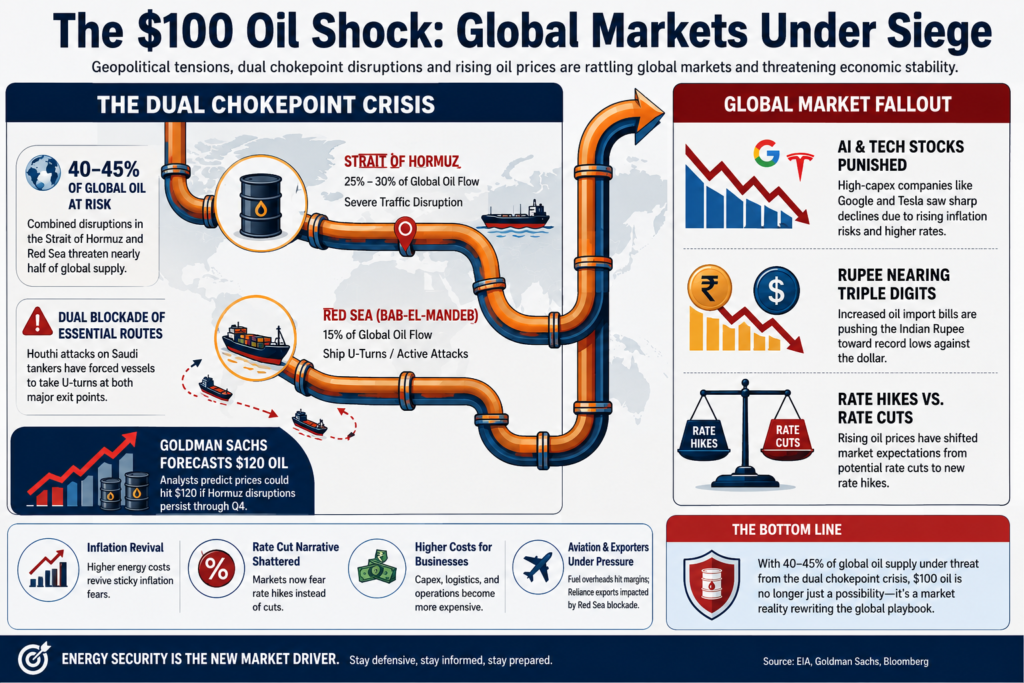
Global financial markets have shifted from optimism surrounding artificial intelligence (AI) to concerns over energy security and geopolitical risks.
Major global indices have experienced increased volatility as investors reassess the economic impact of higher crude oil prices, inflation risks, and supply-chain disruptions.
The focus is no longer limited to corporate earnings or interest-rate expectations.
Instead, markets are increasingly reacting to one question:
Can the world handle another major energy supply shock?
As Brent crude approaches psychologically important levels, investors are closely monitoring developments in two of the world’s most important maritime trade routes.
Understanding the Double Chokepoint
Global oil transportation depends heavily on two strategic waterways:
- The Strait of Hormuz
- The Red Sea (Bab el-Mandeb)
Together, these routes facilitate a significant share of global energy shipments.
Any disruption—whether caused by military conflict, shipping attacks, or geopolitical tensions—can increase transportation costs, insurance premiums, delivery delays, and ultimately global oil prices.
For energy-importing nations, prolonged disruptions create inflationary pressure across multiple sectors.
Why Oil Prices Matter More Than Ever
Crude oil remains one of the world’s most influential economic indicators.
Higher oil prices typically affect:
- Inflation
- Transportation costs
- Manufacturing expenses
- Airline profitability
- Consumer spending
- Trade balances
- Corporate margins
Even if physical supply remains adequate, uncertainty alone can keep prices elevated.
Markets generally price geopolitical risk well before actual shortages occur.
Could Brent Crude Reach Triple Digits?
Several investment banks and commodity analysts have warned that sustained geopolitical disruptions could keep crude prices elevated.
The actual trajectory will depend on multiple factors, including:
- Shipping route stability
- OPEC+ production decisions
- Global demand
- Strategic petroleum reserves
- Diplomatic developments
Rather than focusing on one specific price target, investors should monitor the underlying supply-demand dynamics that influence long-term energy markets.
Why Technology Stocks Become Vulnerable
Technology companies often require significant capital expenditure (CapEx) to fund:
- Data centers
- AI infrastructure
- Semiconductor investments
- Cloud computing expansion
When inflation rises because of higher energy costs:
- Interest rates may remain elevated for longer.
- Financing becomes more expensive.
- Investors may shift from growth stocks toward companies with stronger cash flows.
This explains why periods of rising oil prices sometimes coincide with increased volatility in high-growth technology shares.
India Faces a Dual Challenge
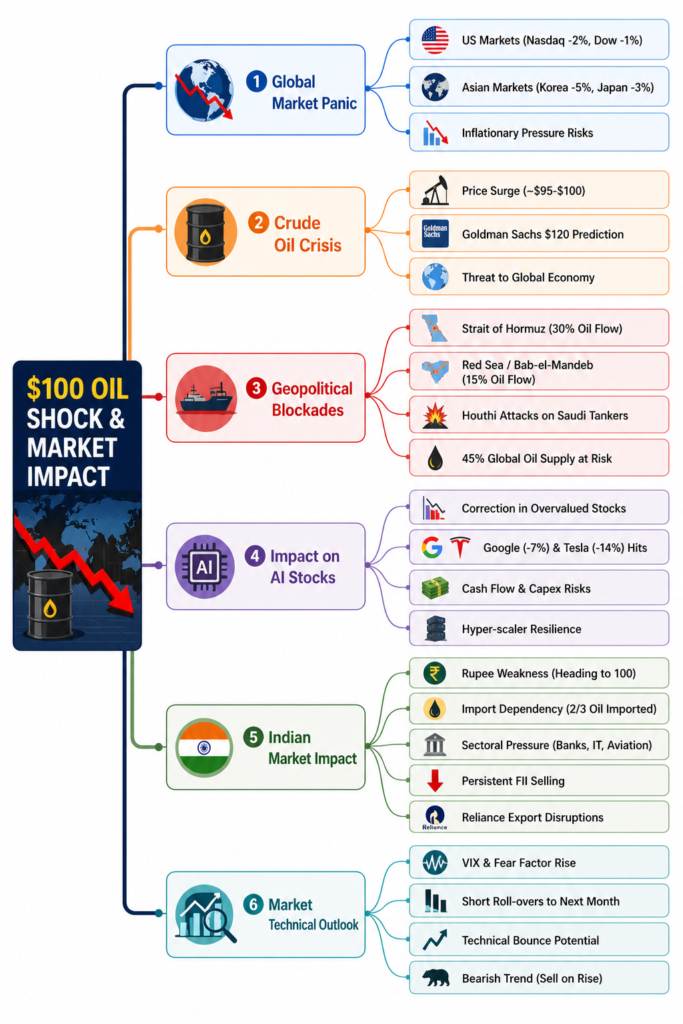
India remains one of the world’s largest crude oil importers.
Higher energy prices affect the economy through several channels:
Rising Import Costs
Expensive crude increases India’s import bill, putting pressure on the current account balance.
Rupee Weakness
Higher oil imports require greater demand for U.S. dollars, which can contribute to rupee depreciation.
Inflation
Fuel costs influence transportation, logistics, manufacturing, and food prices across the economy.
Corporate Earnings
Industries such as:
- Aviation
- Chemicals
- Paints
- Logistics
- Transportation
often experience higher operating costs during oil price spikes.
How Investors Should Read Current Market Volatility
Market corrections during geopolitical uncertainty often involve:
- Higher India VIX
- Increased institutional hedging
- Defensive sector rotation
- Profit booking
- Reduced risk appetite
Short-term technical rebounds may occur, but investors should distinguish between:
- Relief rallies
- Sustainable trend reversals
Risk management remains more important than chasing short-term momentum.
Investment Strategy During an Oil Shock
Periods of elevated oil prices require greater portfolio discipline.
Consider focusing on:
- Companies with strong balance sheets
- Businesses generating consistent free cash flow
- Low debt companies
- Defensive sectors
- Diversified portfolios
Avoid making investment decisions solely on daily geopolitical headlines.
Long-term investing continues to depend on business quality, valuation, and earnings sustainability.
Conclusion: Energy Security Has Become a Market Driver
Global markets are increasingly influenced by geopolitical developments affecting energy supply and trade routes.
Whether oil prices remain elevated will depend on diplomatic outcomes, shipping stability, and global production trends.
For India, sustained high crude prices could pressure inflation, the rupee, and corporate profitability, making risk management more important than ever.
Rather than reacting emotionally to daily volatility, investors should focus on long-term fundamentals, diversification, and companies capable of navigating uncertain macroeconomic conditions.
High-CTR SEO Titles
- The Double Chokepoint: Why $100 Oil Could Change Global Markets Forever
- $100 Oil Is Back? Here’s What It Means for Global Markets and India
- How the Strait of Hormuz and Red Sea Crisis Could Trigger an Oil Shock
- Brent Crude Near $100: Is the Next Global Market Correction Beginning?
- The Energy Crisis Returns: Why Investors Should Watch Oil, Not Just AI
- Double Chokepoint Explained: The Global Oil Crisis Every Investor Should Understand
- Can $100 Oil Trigger the Next Stock Market Selloff? A Complete Analysis
- India at Risk? How Rising Oil Prices Could Impact the Economy, Rupee, and Stock Market