
India’s Banking Sector Is Posting Strong Profits—But Is the Story Too Good to Be True?
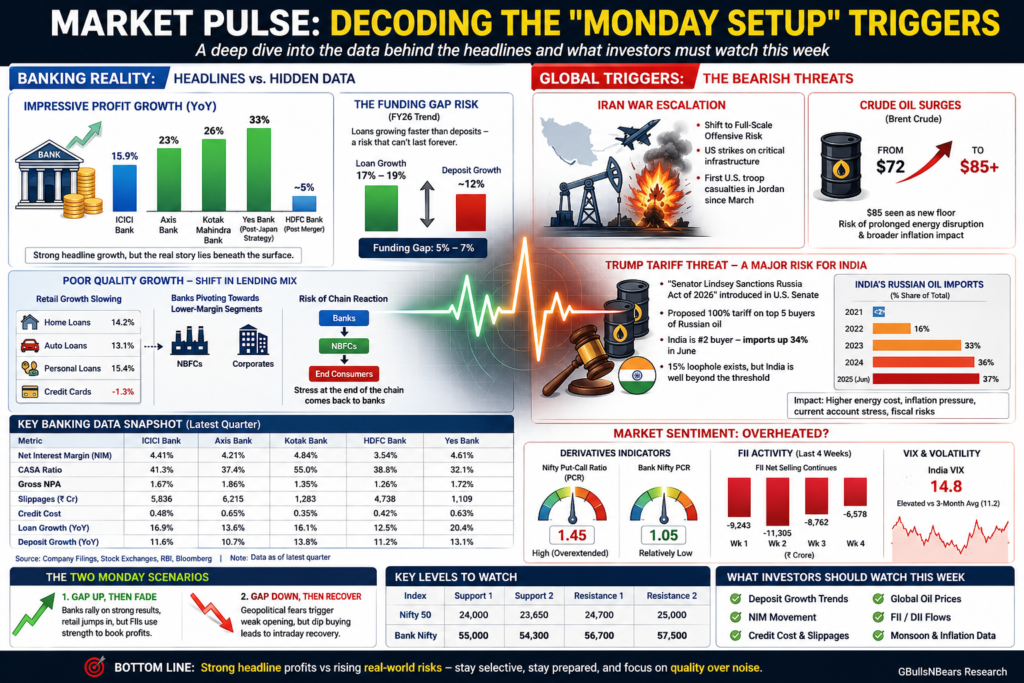
India’s private banking sector has once again delivered an impressive earnings season. Major lenders such as HDFC Bank, ICICI Bank, Axis Bank, Kotak Mahindra Bank, and Yes Bank have reported healthy profit growth, reinforcing confidence in one of the country’s most important industries.
At first glance, the numbers appear extremely encouraging. Double-digit profit growth, stable asset quality, and resilient loan demand paint a picture of a banking sector firing on all cylinders.
However, experienced investors know that headline profits rarely tell the complete story.
Behind the strong earnings lies a combination of slowing deposit growth, changing lending patterns, margin pressure, and rising geopolitical risks that could significantly influence the banking sector over the next few quarters.
Before investing in banking stocks, it is essential to understand the risks hidden beneath the surface.
Why Profit Growth Doesn’t Always Mean Business Growth
Quarterly profit is often the most widely discussed number during earnings season. Yet professional investors spend far more time analyzing the quality of earnings than the earnings themselves.
A bank’s long-term strength depends on several fundamental indicators:
- Deposit Growth
- CASA Ratio
- Net Interest Margin (NIM)
- Loan Growth
- Gross and Net NPA
- Slippages
- Credit Cost
- Provision Coverage Ratio
A bank reporting 20% profit growth but experiencing weak deposit growth or rising bad loans may actually be in a weaker position than a bank growing profits more slowly with stronger fundamentals.
This is why looking beyond headline numbers is crucial.
Hidden Risk #1: Deposit Growth Is Slowing While Loans Keep Rising
One of the biggest concerns facing India’s banking sector today is the widening gap between deposits and credit growth.
Industry Trend
| Metric | Estimated Growth |
|---|---|
| Deposit Growth | ~12% |
| Credit Growth | 17–19% |
Banks are lending significantly faster than they are attracting deposits.
This imbalance cannot continue indefinitely.
Deposits are the raw material of banking. Without sufficient deposits, banks must either pay higher interest rates to attract funds or reduce lending activity.
Both scenarios eventually hurt profitability.
Several leading banks have already indicated that deposit mobilisation remains one of their highest priorities.
Hidden Risk #2: Net Interest Margins Could Face Pressure
Net Interest Margin (NIM) measures how much profit banks earn between borrowing money and lending it.
Higher funding costs directly reduce NIM.
Consider the difference:
- CASA deposits generally cost around 2–4%.
- Fixed deposits often cost 6–8%.
If customers shift from savings accounts to higher-yield fixed deposits, banks face rising funding costs.
Even if loan growth remains healthy, shrinking NIM can reduce future earnings growth.
This explains why investors closely monitor funding trends instead of focusing solely on quarterly profits.
Hidden Risk #3: Retail Lending Is Losing Momentum
Retail loans—including home loans, vehicle loans, and personal loans—have traditionally been among the most profitable segments for banks.
Recent data suggests that retail credit growth has moderated to roughly 15.4%, reflecting slower consumer demand and cautious borrowing.
To maintain overall loan growth, many banks are increasing exposure to:
- Corporate lending
- Infrastructure financing
- NBFCs
- Commercial lending
While these segments help sustain loan growth, they often generate lower margins and introduce different credit risks.
The mix of lending is becoming less favourable than it was during the retail credit boom.
Hidden Risk #4: The Deposit–NBFC–Consumer Chain Needs Close Monitoring
The Indian credit ecosystem has become increasingly interconnected.
A simplified flow looks like this:
Banks → NBFCs → Consumers
Banks lend to NBFCs, which then provide loans to households and small businesses.
If consumer repayment weakens:
- NBFCs experience higher defaults.
- Credit costs rise.
- Banks face indirect stress.
India has already witnessed pressure in parts of the microfinance sector over the past year, reminding investors that credit cycles can change quickly.
Although the banking system today is far stronger than it was before the global financial crisis of 2008, maintaining asset quality remains critical.
Hidden Risk #5: Global Oil Prices and Geopolitics Could Hurt Banking Growth
Bank earnings do not exist in isolation.
Macroeconomic conditions play a major role in determining future profitability.
Recent geopolitical tensions have increased uncertainty in global energy markets.
India imports nearly 85% of its crude oil requirements, making the economy sensitive to sustained increases in oil prices.
Higher crude prices can lead to:
- Higher inflation
- Increased transportation costs
- Slower consumer spending
- Higher borrowing costs
- Pressure on corporate earnings
A prolonged period of elevated oil prices could eventually reduce credit demand and increase repayment risks across multiple sectors.
HDFC Bank: Stability Over Speed
HDFC Bank remains India’s largest private lender and continues to maintain strong asset quality.
However, following its merger with HDFC Ltd., earnings growth has remained relatively modest compared with some peers.
Management has prioritised:
- Balance sheet integration
- Liquidity management
- Deposit mobilisation
- Sustainable lending
Although this strategy may limit short-term earnings growth, it could strengthen the bank’s long-term competitive position.
Investors should judge the bank based on business quality rather than quarterly excitement.
Banking Sector Outlook for Investors
The banking sector continues to benefit from:
- Strong capital adequacy
- Improving digital adoption
- Healthy credit demand
- Expanding financial inclusion
- Stable regulatory oversight
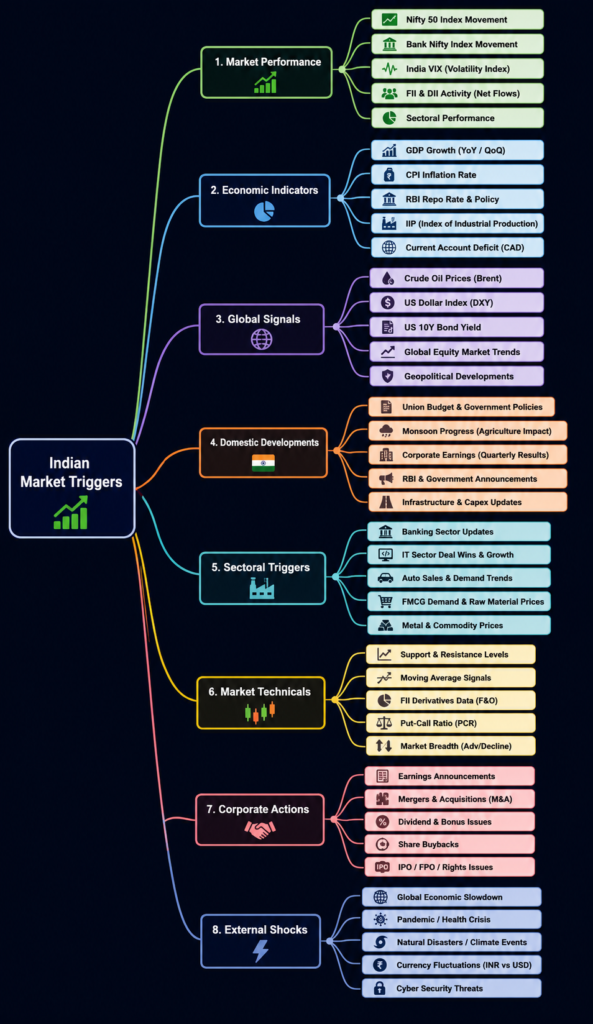
At the same time, investors should closely monitor:
- Deposit growth trends
- CASA ratio
- Credit costs
- Slippages
- Retail loan demand
- Oil prices
- RBI policy decisions
- Foreign Institutional Investor (FII) flows
These indicators often provide early signals about future earnings.
Investment Strategy: What Should Investors Do?
Instead of reacting to quarterly profit announcements, investors should focus on long-term fundamentals.
Before investing in any banking stock, ask these questions:
- Is deposit growth improving?
- Is the CASA ratio stable?
- Are NPAs under control?
- Is loan growth sustainable?
- Is management maintaining prudent provisioning?
- Is valuation reasonable compared with historical averages?
Companies that consistently perform well across these parameters are more likely to create long-term shareholder value.
Final Thoughts
India’s banking sector remains one of the strongest pillars of the country’s economy.
However, impressive quarterly profits should not distract investors from the structural challenges developing beneath the surface.
Slower deposit growth, changing loan composition, potential margin pressure, global oil market uncertainty, and evolving geopolitical risks all deserve careful attention.
Successful investing is not about chasing the highest quarterly profit growth.
It is about identifying businesses capable of delivering sustainable growth through changing economic cycles.
The smartest investors will look beyond the headlines and focus on the foundations that truly determine long-term value.
Frequently Asked Questions (FAQs)
Why is deposit growth important for banks?
Deposits are the primary source of funding for loans. Without strong deposit growth, banks may face higher funding costs or slower lending growth.
What is Net Interest Margin (NIM)?
Net Interest Margin is the difference between the interest banks earn on loans and the interest they pay on deposits. Higher NIM generally supports stronger profitability.
Are Indian banking stocks still a good long-term investment?
Many Indian banks continue to have strong fundamentals. Investors should evaluate individual banks based on asset quality, deposit franchise, valuation, management quality, and long-term growth potential rather than relying only on quarterly profit figures.
What are the biggest risks for the banking sector in 2026?
Key risks include slowing deposit growth, margin pressure, changes in loan mix, rising credit costs, geopolitical uncertainty, elevated oil prices, inflation, and shifts in RBI monetary policy.
High CTR Titles
- India’s Banking Boom or Profit Mirage? 5 Hidden Risks Investors Can’t Ignore
- Private Banks Report Record Profits, But Here’s Why Smart Investors Are Worried
- Bank Earnings Are Rising, But the Real Risks Are Just Beginning
- India’s Banking Sector at a Crossroads: Strong Profits, Weak Foundations?
- The Truth Behind India’s Bank Profit Growth: Why the Market May Be Too Optimistic
- Bank Profit Growth Looks Strong—Until You Look Under the Hood
- HDFC, ICICI, Axis & Kotak Results Decoded: What Investors Are Missing
- Record Bank Profits vs Rising Global Risks: What It Means for Indian Markets
- Will Bank Stocks Rally or Fall? 5 Warning Signs Investors Should Watch
- Banking Stocks Are Soaring, But These Hidden Risks Could Trigger a Sell-Off